Blog's Page
 Blog's Page
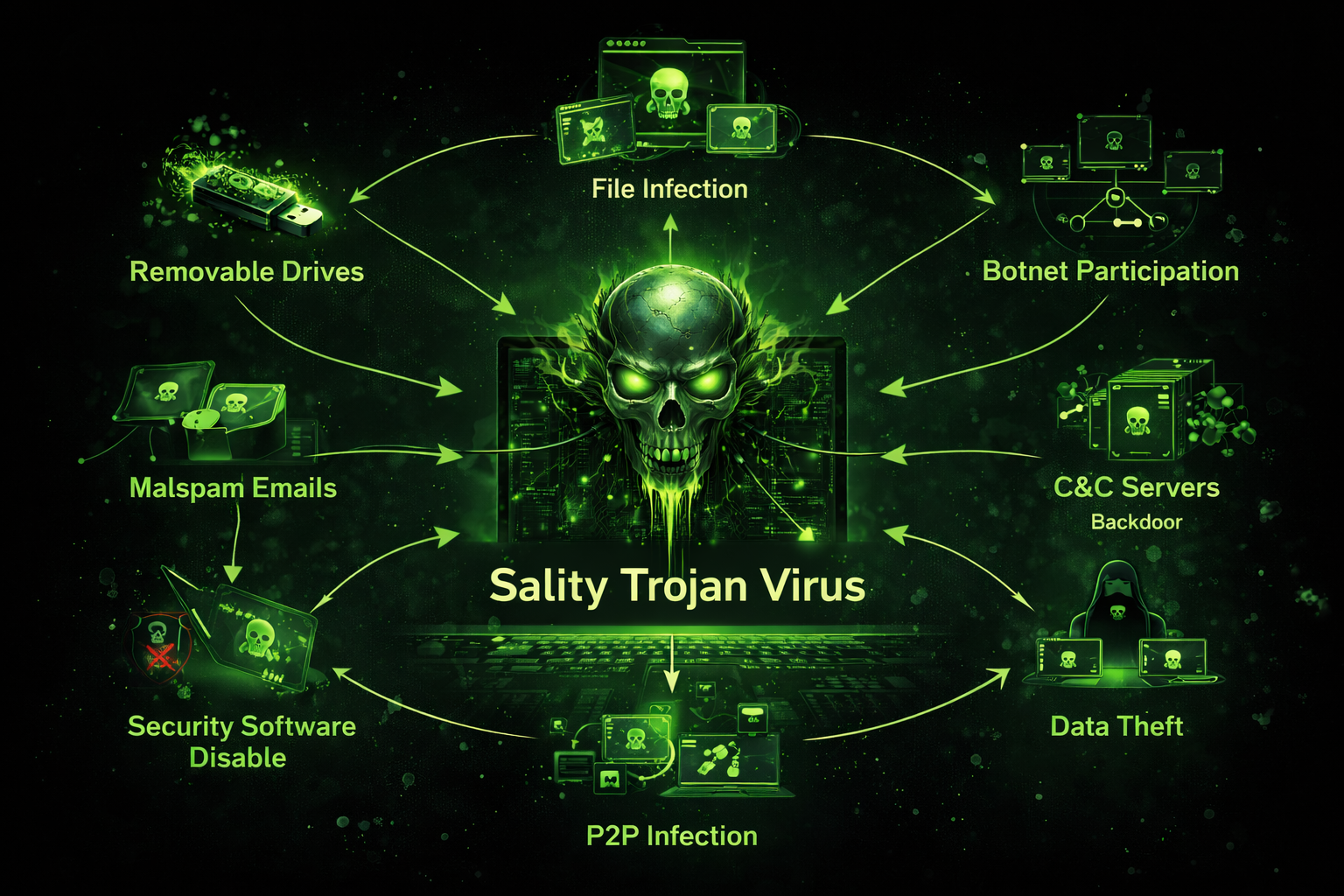
The Sality Trojan Virus Is One Of The Most Persistent And Dangerous Forms Of Malware To Infect Windows Systems. Known For Its Ability To Spread Rapidly, Disable Security Tools, And Connect Infected Computers To Malicious Botnets, Sality Has Remained A Serious Cybersecurity Threat For Years. In This Comprehensive Guide, We’ll Explore What The Sality Trojan Virus Is, How It Works, How It Spreads, How To Remove It, And How To Protect Your System From Future Infections.
Sality Is A Polymorphic File-infecting Malware That Primarily Targets Windows Executable Files (.exe And .scr). Once It Infects A System, It Injects Malicious Code Into Legitimate Files, Allowing It To Spread Quickly And Evade Detection.
Although Commonly Referred To As A “Trojan,” Sality Is More Accurately Classified As A file-infector Virus With Backdoor Capabilities. It Modifies System Files And Installs Additional Malware Components, Making It Extremely Dangerous For Both Personal Users And Businesses.
Sality First Appeared In The Early 2000s And Has Undergone Numerous Modifications Since Then. Cybercriminals Continuously Updated It With:
Rootkit Capabilities
Peer-to-peer (P2P) Networking Functions
Advanced Encryption Techniques
Botnet Communication Features
These Upgrades Made Sality Increasingly Difficult To Detect And Remove Using Traditional Antivirus Programs.
Once Sality Infects A System, It Performs Several Malicious Actions:
Sality Injects Malicious Code Into Executable Files, Enabling It To Spread Whenever Infected Programs Are Opened.
It Attempts To Terminate Antivirus Programs, Firewall Protections, And System Monitoring Tools.
The Virus Connects The Infected Computer To Remote Command-and-control (C2) Servers, Allowing Attackers To:
Steal Sensitive Data
Install Additional Malware
Use The System In Botnet Attacks
Send Spam Emails
Sality Modifies Windows Registry Settings To Ensure It Runs Automatically At Startup.
Sality Spreads Through Multiple Channels:
Infected USB Drives
Peer-to-peer File Sharing Networks
Malicious Email Attachments
Compromised Websites
Software Cracks And Pirated Programs
Removable Drives Are A Common Infection Method Because Sality Can Create Autorun Files That Execute Automatically When The USB Device Is Plugged Into Another Computer.
Recognizing The Signs Of Infection Early Can Help Minimize Damage. Common Symptoms Include:
Disabled Antivirus Software
Frequent System Crashes
Slow Performance
Missing Or Corrupted Files
Blocked Access To Security Websites
Unauthorized Network Activity
If Your System Displays Multiple Symptoms, Immediate Action Is Recommended.
Sality Is Not Just A Nuisance Virus—it Poses Serious Risks:
It Can Steal Passwords, Banking Information, And Personal Data.
Infected Systems May Become Part Of A Botnet Used For DDoS Attacks.
Since It Infects Executable Files, Cleaning Can Be Complicated And May Require Reinstalling The Operating System.
In Business Environments, Sality Can Spread Across Local Networks Rapidly.
Removing Sality Can Be Challenging Because It Infects Legitimate Files. Here’s A Step-by-step Approach:
Immediately Disconnect Your Device To Prevent Further Data Transmission.
Boot Windows In Safe Mode To Limit Active Malicious Processes.
Run A Full System Scan With Updated Antivirus Software. Many Cybersecurity Companies Provide Dedicated Removal Tools Specifically Designed For Sality Variants.
If The Infection Persists, Use A Bootable Antivirus Rescue Disk To Scan Your System Before Windows Loads.
In Severe Infections, The Safest Solution May Be:
Back Up Important Files (avoid Backing Up Executable Files)
Format The Drive
Reinstall Windows From A Clean Source
Prevention Is Always Better Than Cure. Follow These Best Practices:
Regular Updates Patch Security Vulnerabilities.
Install A Trusted Antivirus And Enable Real-time Protection.
Many Sality Infections Originate From Cracked Software Downloads.
Turn Off Autorun For Removable Drives To Prevent Automatic Infection.
Never Open Attachments From Unknown Senders.
Keep Offline Backups Of Important Files To Minimize Data Loss.
One Of The Most Dangerous Features Of Sality Is Its Peer-to-peer Botnet Architecture. Unlike Centralized Botnets, Sality’s P2P Structure Makes It Harder For Authorities To Shut Down. Each Infected Computer Can Communicate With Others, Distributing Commands And Updates Without Relying On A Single Server.
Businesses Face Higher Risks Due To:
Shared Network Drives
USB Device Usage
Large Email Volumes
Sensitive Customer Data
A Single Infected Machine Can Compromise An Entire Network, Leading To Data Breaches And Financial Loss.
Although Modern Security Solutions Are More Advanced, Sality Variants Still Pose Threats, Especially To:
Unpatched Windows Systems
Systems Without Active Antivirus
Users Downloading Cracked Or Suspicious Files
Cybercriminals Continuously Evolve Malware, So Staying Vigilant Is Essential.
It Is Technically A Polymorphic File-infector Virus With Trojan-like Backdoor Capabilities.
Sometimes. Severe Infections May Require System Reinstallation.
Yes, It Can Download Additional Malware Modules That Harvest Credentials.
It Primarily Spreads Via Infected Files And Removable Drives But Can Move Across Networks If Shared Files Are Accessed.
The Sality Trojan Virus Remains One Of The Most Persistent Malware Families In Cybersecurity History. Its Ability To Infect Executable Files, Disable Security Tools, And Join Botnets Makes It Particularly Dangerous. Early Detection, Immediate Removal, And Strong Preventive Practices Are Crucial To Protecting Your System.
If You Suspect A Sality Infection, Act Quickly. Disconnect Your Device, Scan With Updated Security Software, And Consider Professional Assistance If Necessary. Staying Informed And Cautious Is Your Best Defense Against Evolving Cyber Threats.
Step 1: Boot Into Safe Mode
Restart Your PC And Press F8 (or Shift + F8 For Some Systems) Before Windows Loads.
Choose Safe Mode With Networking.
Safe Mode Prevents Most Malware From Loading.
Press Win + R, Type appwiz.cpl, And Press Enter.
Sort By Install Date And Uninstall Unknown Or Recently Added Programs.
Use A Trusted Anti-malware Tool:
Malwarebytes – https://www.malwarebytes.com
Screenshot Of Malwarebytes - Visit Links
Microsoft Defender – Built Into Windows 10/11
HitmanPro, ESET Online Scanner, Or Kaspersky Virus Removal Tool
ZoneAlarm Pro Antivirus + Firewall NextGen
VIPRE Antivirus - US And Others Countries, | India
Run A Full Scan And Delete/quarantine Detected Threats.
Win + R, Type temp → Delete All Files.Press Win + R, Type %temp% → Delete All Files.
Use Disk Cleanup: cleanmgr In The Run Dialog.
Go To: C:\Windows\System32\drivers\etc
Open hosts File With Notepad.
Replace With Default Content:
Press Ctrl + Shift + Esc → Open Task Manager
Go To Startup Tab
Disable Any Suspicious Entries.
Open Command Prompt As Administrator.
Run These Commands:
netsh Winsock Reset

netsh Int Ip Reset

ipconfig /flushdns
Unwanted Homepage Or Search Engine
Pop-ups Or Redirects
Unknown Extensions Installed
For Chrome:
Go To: chrome://extensions/
Remove Anything Unfamiliar
For Firefox:
Go To: about:addons → Extensions
Remove Suspicious Add-ons
For Edge:
Go To: edge://extensions/
Uninstall Unknown Add-ons
Chrome:
Go To chrome://settings/reset → "Restore Settings To Their Original Defaults"
Firefox:
Go To about:support → "Refresh Firefox"
Edge:
Go To edge://settings/resetProfileSettings → "Reset Settings"
All Browsers:
Use Ctrl + Shift + Del → Select All Time
Clear Cookies, Cached Files, And Site Data
Make Sure They Are Not Hijacked.
Chrome: chrome://settings/search
Firefox: about:preferences#search
Edge: edge://settings/search
Chrome: chrome://settings/cleanup
Use Malwarebytes Browser Guard For Real-time Browser Protection.
Always Download Software From Trusted Sources.
Keep Windows, Browsers, And Antivirus Updated.
Avoid Clicking Suspicious Links Or Ads.
Use ad Blockers And reputable Antivirus Software.
Backup Your Files Regularly.
To Remove Malware From Your Windows PC, Start By Booting Into Safe Mode, Uninstalling Suspicious Programs, And Scanning With Trusted Anti-malware Tools Like Malwarebytes. Clear Temporary Files, Reset Your Network Settings, And Check Startup Apps For Anything Unusual.
For web Browsers, Remove Unwanted Extensions, Reset Browser Settings, Clear Cache And Cookies, And Ensure Your Homepage And Search Engine Haven’t Been Hijacked. Use Cleanup Tools Like Chrome Cleanup Or Browser Guard For Added Protection.
?? Prevention Tips: Keep Software Updated, Avoid Suspicious Downloads, And Use Antivirus Protection Plus Browser Ad Blockers. Regular Backups Are Essential.
Why It Matters: Not All VPNs Offer Malware Protection.
What To Look For: Providers With built-in Malware/ad/tracker Blockers (e.g., NordVPN’s Threat Protection, ProtonVPN’s NetShield).
Purpose: Prevents Data Leaks If Your VPN Connection Drops.
Benefit: Ensures Your Real IP And Browsing Activity Aren’t Exposed To Malware-distributing Websites.
Why It Matters: DNS Leaks Can Expose Your Online Activity To Attackers.
Solution: Enable DNS Leak Protection In Your VPN Settings Or Use A Secure DNS Like Cloudflare (1.1.1.1).
Risk: Free VPNs Often Contain Malware, Sell User Data, Or Lack Security Features.
Better Option: Use Reputable Paid VPNs That Offer security Audits And Transparent Privacy Policies.
Some VPNs Block Known Phishing And Malicious Sites.
Example: Surfshark’s CleanWeb, CyberGhost’s Content Blocker.
Reason: Security Patches Fix Known Vulnerabilities.
Tip: Enable Auto-updates Or Check For Updates Weekly.
Scope: Malware Can Enter Through Phones, Tablets, Or IoT Devices.
Solution: Install VPN Apps On Every Internet-connected Device.
Fact: VPNs Do Not Remove Or Detect Malware On Your System.
Complement It With:
Antivirus Software
Firewall
Browser Extensions For Script Blocking
VPN Encrypts Traffic But Can’t Stop Malware From Executing If You Download Infected Files.
Split Tunneling Allows Certain Apps/sites To Bypass VPN.
Tip: Never Exclude Browsers, Email Clients, Or Download Managers From VPN Tunneling.
A VPN (Virtual Private Network) Enhances Your Online Privacy By Encrypting Your Internet Traffic And Masking Your IP Address. It Protects Your Data On Public Wi-Fi, Hides Browsing Activity From Hackers And ISPs, And Helps Bypass Geo-restrictions. VPNs Also Add A Layer Of Defense Against Malware By Blocking Malicious Websites And Trackers When Using Advanced Features. However, A VPN Does Not Remove Existing Malware Or Act As Antivirus Software. For Full Protection, Combine VPN Use With Antivirus Tools, Regular Software Updates, And Cautious Browsing Habits. Always Choose A Reputable VPN Provider With Strong Security And Privacy Policies.
Sality Trojan Virus, How To Remove Sality Trojan Virus, Delete Sality Trojan Virus, Uninstall Sality Trojan Virus, Get Rid Of Sality Trojan Virus, Sal