Blog's Page
 Blog's Page
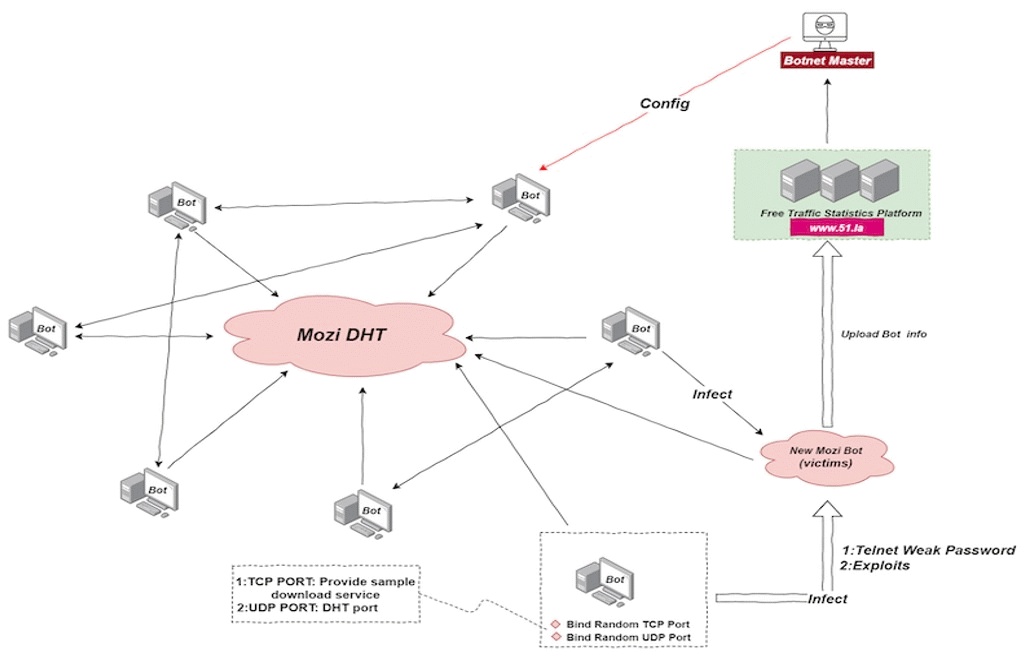
Mozi Is An Advanced IoT Malware That Has Been Observed Spreading Across Internet-connected Devices Worldwide. Once A Device Is Infected, It Becomes Part Of A Large Peer-to-peer (P2P) Botnet That Attackers Can Exploit For Malicious Activities Such As Distributed Denial-of-service (DDoS) Attacks, Unauthorized Data Theft, And The Execution Of Additional Malicious Payloads.
Security Researchers Have Identified That Mozi Incorporates Techniques And Source Code Derived From Well-known IoT Malware Families, Including Gafgyt, Mirai, And IoT Reaper. The Malware Primarily Targets Embedded Linux-based Devices By Exploiting Exposed Telnet Services. Home Routers, Digital Video Recorders (DVRs), And Similar IoT Equipment Are Especially Vulnerable When They Are Running Outdated Firmware, Use Default Or Weak Telnet Credentials, Or Are Improperly Configured.
After Successfully Compromising A Device, Mozi Connects It To A Decentralized P2P Botnet Instead Of Relying On A Traditional Command-and-control Server. It Leverages A Distributed Hash Table (DHT) Protocol To Exchange Information And Coordinate With Other Infected Devices, Making The Botnet More Resilient And Difficult To Disrupt.
The Mozi Malware Propagates Through A Sequence Of Automated Steps That Enable It To Recruit Vulnerable IoT Devices Into Its Peer-to-peer Botnet.
echo. The Downloader Is Then Executed, Retrieving The Main Mozi Malware Binary From The Download Location Provided By The Infected Bot Node.The Vulnerabilities Exploited By Mozi Botnet Are Shown As:
| VULNERABILITY | AFFECTED DEVICES |
|---|---|
| Eir D1000 Wireless Router RCI | Eir D1000 Router |
| Vacron NVR RCE | Vacron NVR Devices |
| CVE-2014-8361 | Devices Using The Realtek SDK |
| Netgear Cig-bin Command Injection | Netgear R7000 And R6400 |
| Netgear Setup.cgi Unauthenticated RCE | DGN1000 Netgear Routers |
| JAWS Webserver Unauthenticated Shell Command Execution | MVPower DVR |
| CVE-2017-17215 | Huawei Router HG532 |
| HNAP SoapAction-Header Command Execution | D-Link Devices |
| CVE-2018-10561, CVE-2018-10562 | GPON Routers |
| UPnP SOAP TelnetD Command Execution | D-Link Devices |
| CCTV/DVR Remote Code Execution | CCTV DVR |
IOC (Sample MD5):
IOC (File Hash):
Countermeasures And Best Practices For Prevention:
Users And Administrators Are Advised To Take The Following Preventive Measures To Protect Their Devices:
The Mozi IoT Botnet Is A Decentralized Network Of Compromised Internet Of Things (IoT) Devices Controlled By The Mozi Malware. First Identified In 2019, Mozi Primarily Targets Embedded Linux-based Devices Such As Home Routers, Digital Video Recorders (DVRs), Network Video Recorders (NVRs), And Other Smart Devices That Are Exposed To The Internet. It Spreads By Exploiting Weak Or Default Telnet Credentials And Known Software Vulnerabilities In Unpatched IoT Devices.
Unlike Traditional Botnets That Rely On Centralized Command-and-control (C2) Servers, Mozi Uses A peer-to-peer (P2P) Communication Architecture Based On The Distributed Hash Table (DHT) Protocol. This Decentralized Design Enables Infected Devices To Communicate Directly With One Another, Making The Botnet More Resilient To Disruption And More Difficult For Security Researchers And Law Enforcement To Dismantle.
Once A Device Is Compromised, It Becomes A Bot Node Within The Mozi Network. The Infected Device Can Receive Commands, Participate In Malware Distribution, And Assist In Infecting Additional Vulnerable IoT Devices. The Botnet Has Been Associated With Several Malicious Activities, Including Distributed Denial-of-service (DDoS) Attacks, Payload Delivery, Unauthorized Execution Of Commands, And Other Cyberattacks Orchestrated By The Botnet Operators.
Mozi Has Become One Of The Most Significant IoT Botnets Due To Its Rapid Propagation, Decentralized Infrastructure, And Ability To Compromise A Wide Range Of Internet-connected Devices. Protecting Against Mozi Requires Disabling Unnecessary Remote Services Such As Telnet, Using Strong And Unique Passwords, Regularly Updating Device Firmware, And Applying Security Patches To Eliminate Known Vulnerabilities.
Step 1: Boot Into Safe Mode
Restart Your PC And Press F8 (or Shift + F8 For Some Systems) Before Windows Loads.
Choose Safe Mode With Networking.
Safe Mode Prevents Most Malware From Loading.
Press Win + R, Type appwiz.cpl, And Press Enter.
Sort By Install Date And Uninstall Unknown Or Recently Added Programs.
Use A Trusted Anti-malware Tool:
Malwarebytes – https://www.malwarebytes.com
Screenshot Of Malwarebytes - Visit Links
Microsoft Defender – Built Into Windows 10/11
HitmanPro, ESET Online Scanner, Or Kaspersky Virus Removal Tool
ZoneAlarm Pro Antivirus + Firewall NextGen
VIPRE Antivirus - US And Others Countries, | India
Run A Full Scan And Delete/quarantine Detected Threats.
Win + R, Type temp → Delete All Files.Press Win + R, Type %temp% → Delete All Files.
Use Disk Cleanup: cleanmgr In The Run Dialog.
Go To: C:\Windows\System32\drivers\etc
Open hosts File With Notepad.
Replace With Default Content:
Press Ctrl + Shift + Esc → Open Task Manager
Go To Startup Tab
Disable Any Suspicious Entries.
Open Command Prompt As Administrator.
Run These Commands:
netsh Winsock Reset

netsh Int Ip Reset

ipconfig /flushdns
Unwanted Homepage Or Search Engine
Pop-ups Or Redirects
Unknown Extensions Installed
For Chrome:
Go To: chrome://extensions/
Remove Anything Unfamiliar
For Firefox:
Go To: about:addons → Extensions
Remove Suspicious Add-ons
For Edge:
Go To: edge://extensions/
Uninstall Unknown Add-ons
Chrome:
Go To chrome://settings/reset → "Restore Settings To Their Original Defaults"
Firefox:
Go To about:support → "Refresh Firefox"
Edge:
Go To edge://settings/resetProfileSettings → "Reset Settings"
All Browsers:
Use Ctrl + Shift + Del → Select All Time
Clear Cookies, Cached Files, And Site Data
Make Sure They Are Not Hijacked.
Chrome: chrome://settings/search
Firefox: about:preferences#search
Edge: edge://settings/search
Chrome: chrome://settings/cleanup
Use Malwarebytes Browser Guard For Real-time Browser Protection.
Always Download Software From Trusted Sources.
Keep Windows, Browsers, And Antivirus Updated.
Avoid Clicking Suspicious Links Or Ads.
Use ad Blockers And reputable Antivirus Software.
Backup Your Files Regularly.
To Remove Malware From Your Windows PC, Start By Booting Into Safe Mode, Uninstalling Suspicious Programs, And Scanning With Trusted Anti-malware Tools Like Malwarebytes. Clear Temporary Files, Reset Your Network Settings, And Check Startup Apps For Anything Unusual.
For web Browsers, Remove Unwanted Extensions, Reset Browser Settings, Clear Cache And Cookies, And Ensure Your Homepage And Search Engine Haven’t Been Hijacked. Use Cleanup Tools Like Chrome Cleanup Or Browser Guard For Added Protection.
?? Prevention Tips: Keep Software Updated, Avoid Suspicious Downloads, And Use Antivirus Protection Plus Browser Ad Blockers. Regular Backups Are Essential.
Why It Matters: Not All VPNs Offer Malware Protection.
What To Look For: Providers With built-in Malware/ad/tracker Blockers (e.g., NordVPN’s Threat Protection, ProtonVPN’s NetShield).
Purpose: Prevents Data Leaks If Your VPN Connection Drops.
Benefit: Ensures Your Real IP And Browsing Activity Aren’t Exposed To Malware-distributing Websites.
Why It Matters: DNS Leaks Can Expose Your Online Activity To Attackers.
Solution: Enable DNS Leak Protection In Your VPN Settings Or Use A Secure DNS Like Cloudflare (1.1.1.1).
Risk: Free VPNs Often Contain Malware, Sell User Data, Or Lack Security Features.
Better Option: Use Reputable Paid VPNs That Offer security Audits And Transparent Privacy Policies.
Some VPNs Block Known Phishing And Malicious Sites.
Example: Surfshark’s CleanWeb, CyberGhost’s Content Blocker.
Reason: Security Patches Fix Known Vulnerabilities.
Tip: Enable Auto-updates Or Check For Updates Weekly.
Scope: Malware Can Enter Through Phones, Tablets, Or IoT Devices.
Solution: Install VPN Apps On Every Internet-connected Device.
Fact: VPNs Do Not Remove Or Detect Malware On Your System.
Complement It With:
Antivirus Software
Firewall
Browser Extensions For Script Blocking
VPN Encrypts Traffic But Can’t Stop Malware From Executing If You Download Infected Files.
Split Tunneling Allows Certain Apps/sites To Bypass VPN.
Tip: Never Exclude Browsers, Email Clients, Or Download Managers From VPN Tunneling.
A VPN (Virtual Private Network) Enhances Your Online Privacy By Encrypting Your Internet Traffic And Masking Your IP Address. It Protects Your Data On Public Wi-Fi, Hides Browsing Activity From Hackers And ISPs, And Helps Bypass Geo-restrictions. VPNs Also Add A Layer Of Defense Against Malware By Blocking Malicious Websites And Trackers When Using Advanced Features. However, A VPN Does Not Remove Existing Malware Or Act As Antivirus Software. For Full Protection, Combine VPN Use With Antivirus Tools, Regular Software Updates, And Cautious Browsing Habits. Always Choose A Reputable VPN Provider With Strong Security And Privacy Policies.
Mozi IoT Botnet, Remove Mozi IoT Botnet, Mozi IoT Botnet Removal, Delete Mozi IoT Botnet, Uninstall Mozi IoT Botnet