Blog's Page
 Blog's Page
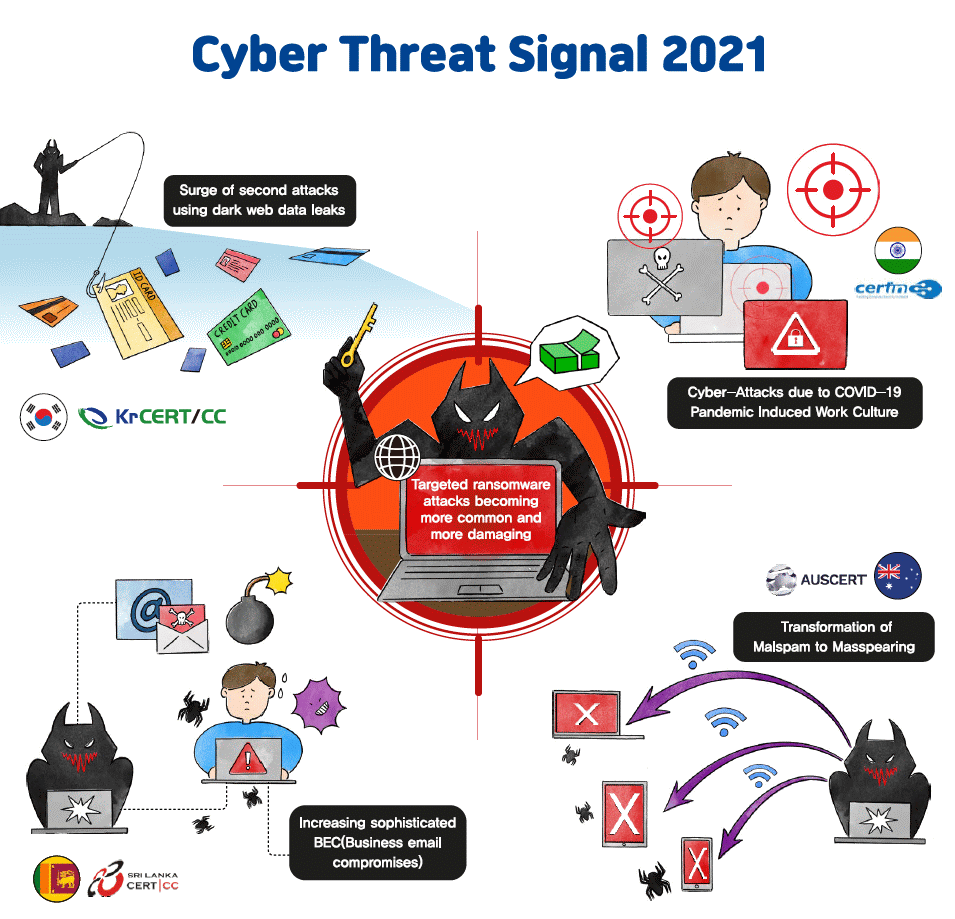
The Year 2021 Marked A Significant Turning Point In The Global Cybersecurity Landscape. As Organizations Accelerated Digital Transformation And Embraced Remote Work Following The COVID-19 Pandemic, Cybercriminals Took Advantage Of The Expanding Attack Surface To Launch Increasingly Sophisticated Attacks. Ransomware Campaigns, Supply Chain Compromises, Phishing Scams, Cloud Security Breaches, And Attacks Targeting Critical Infrastructure Became More Frequent And More Damaging Than Ever Before.
Cyber Threat Signals Observed Throughout 2021 Revealed That Attackers Were No Longer Relying Solely On Traditional Malware. Instead, They Adopted Advanced Techniques Such As Double Extortion, Zero-day Exploitation, Credential Theft, Fileless Malware, And Living-off-the-land (LotL) Tactics To Evade Detection. Both Public And Private Organizations Worldwide Experienced Record-breaking Cyber Incidents, Emphasizing The Importance Of Proactive Cybersecurity Strategies.
This Article Explores The Major Cyber Threat Signals Of 2021, Highlights Notable Attack Trends, And Discusses Lessons Organizations Can Apply To Strengthen Their Cyber Resilience.
A cyber Threat Signal Refers To Any Indicator, Event, Or Pattern That Suggests Malicious Cyber Activity May Be Occurring Or Is Likely To Occur. These Signals Can Originate From Security Monitoring Tools, Threat Intelligence Feeds, Endpoint Detection Systems, Network Traffic Analysis, Or Reports From Cybersecurity Researchers.
Threat Signals Help Organizations Identify Emerging Attack Campaigns, Detect Suspicious Activities Early, And Respond Before Attackers Can Achieve Their Objectives. In 2021, The Volume And Sophistication Of These Signals Increased Dramatically, Reflecting The Growing Capabilities Of Cybercriminal Groups And Nation-state Actors.
The Widespread Adoption Of Remote Work Significantly Expanded Organizational Attack Surfaces During 2021. Employees Accessed Corporate Resources From Home Networks Using Personal Devices, Cloud Applications, And Virtual Private Networks (VPNs). While These Technologies Enabled Business Continuity, They Also Created New Security Challenges.
Attackers Exploited Weak Passwords, Unpatched VPN Appliances, Exposed Remote Desktop Protocol (RDP) Services, And Insecure Cloud Configurations To Gain Unauthorized Access. Organizations With Limited Visibility Into Remote Endpoints Became Especially Vulnerable To Credential Theft And Malware Infections.
Ransomware Remained One Of The Most Prominent Cyber Threats Throughout 2021. Attack Groups Evolved From Indiscriminate Attacks To Highly Targeted Operations Against Organizations Capable Of Paying Large Ransom Demands.
Modern Ransomware Attacks Followed A Multi-stage Process That Included Initial Access, Privilege Escalation, Lateral Movement, Data Exfiltration, File Encryption, And Extortion. Many Ransomware Groups Adopted A double-extortion Strategy By Stealing Confidential Information Before Encrypting Systems. Victims Faced The Risk Of Both Operational Disruption And Public Exposure Of Sensitive Data.
Healthcare Providers, Educational Institutions, Financial Organizations, Manufacturing Companies, And Government Agencies Were Among The Sectors Most Affected By Ransomware Campaigns.
One Of The Defining Cyber Threat Signals Of 2021 Was The Increasing Prevalence Of Supply Chain Attacks. Instead Of Attacking Organizations Directly, Threat Actors Compromised Trusted Software Vendors, Service Providers, Or Technology Partners.
Once Malicious Code Entered Legitimate Software Updates, It Could Spread Rapidly To Thousands Of Downstream Customers. Supply Chain Attacks Demonstrated That Even Organizations With Mature Security Programs Could Become Victims If Trusted Third-party Vendors Were Compromised.
These Incidents Highlighted The Importance Of Software Integrity Verification, Vendor Risk Management, And Continuous Monitoring Of Third-party Relationships.
Phishing Remained One Of The Most Effective Attack Methods During 2021. Cybercriminals Crafted Increasingly Convincing Emails Impersonating Financial Institutions, Government Agencies, Healthcare Providers, Cloud Service Providers, And Well-known Brands.
Common Phishing Objectives Included:
Credential Theft
Malware Delivery
Financial Fraud
Business Email Compromise (BEC)
Account Takeover
COVID-19-related Themes, Vaccine Information, Remote Work Policies, And Financial Assistance Programs Were Frequently Used To Lure Victims Into Opening Malicious Attachments Or Clicking Fraudulent Links.
Social Engineering Attacks Also Expanded Beyond Email To Include SMS Phishing (smishing), Voice Phishing (vishing), And Messaging Platform Scams.
Cloud Adoption Accelerated Significantly During 2021 As Organizations Migrated Applications And Data To Public Cloud Environments.
However, Cloud Security Misconfigurations Emerged As A Major Threat Signal. Common Issues Included:
Publicly Exposed Storage Buckets
Weak Identity Management
Excessive User Permissions
Insecure APIs
Lack Of Encryption
Misconfigured Cloud Firewalls
Rather Than Exploiting Vulnerabilities Within Cloud Platforms Themselves, Attackers Primarily Targeted Misconfigured Cloud Environments Created By Customers.
Organizations Increasingly Adopted Cloud Security Posture Management (CSPM) Solutions To Identify And Remediate Configuration Weaknesses.
Several Critical Zero-day Vulnerabilities Attracted Worldwide Attention During 2021. A Zero-day Vulnerability Is A Software Flaw That Becomes Publicly Known Before Developers Have Released A Security Patch.
Threat Actors Rapidly Weaponized Newly Discovered Vulnerabilities, Often Exploiting Them Within Hours Of Disclosure.
Organizations Struggled To Maintain Effective Vulnerability Management Due To The Growing Number Of Critical Software Flaws Affecting Operating Systems, Enterprise Applications, And Internet-facing Services.
Rapid Patch Deployment Became A Key Cybersecurity Priority.
Internet-connected Devices Continued To Represent Attractive Targets For Attackers.
Commonly Targeted Devices Included:
Home Routers
IP Cameras
Smart TVs
Network Video Recorders
Digital Video Recorders
Industrial Sensors
Many IoT Devices Suffered From Weak Authentication, Outdated Firmware, Default Credentials, And Limited Security Controls.
Large IoT Botnets Leveraged Compromised Devices To Launch Distributed Denial-of-Service (DDoS) Attacks Against Businesses And Online Services.
Critical Infrastructure Became One Of The Primary Targets During 2021.
Threat Actors Targeted:
Energy Companies
Water Treatment Facilities
Transportation Systems
Healthcare Providers
Telecommunications Providers
Government Agencies
These Attacks Demonstrated That Cyber Incidents Could Disrupt Essential Services Affecting Millions Of People.
Governments Around The World Responded By Strengthening Cybersecurity Regulations And Increasing Investments In National Cyber Defense Capabilities.
Insider Threats Remained A Persistent Challenge.
Threats Originated From:
Disgruntled Employees
Negligent Users
Third-party Contractors
Compromised Administrator Accounts
Insiders Often Possessed Legitimate Access To Sensitive Systems, Making Their Activities More Difficult To Detect Than External Attacks.
Organizations Increasingly Implemented User Behavior Analytics (UBA) And Privileged Access Management (PAM) Solutions To Reduce Insider Risks.
Artificial Intelligence (AI) Played A Growing Role In Cybersecurity During 2021.
Security Teams Used AI To:
Detect Anomalies
Identify Malware
Analyze Threat Intelligence
Prioritize Alerts
Automate Incident Response
At The Same Time, Attackers Also Leveraged Automation To Conduct Password Attacks, Phishing Campaigns, And Vulnerability Scanning At Greater Speed And Scale.
The Cybersecurity Landscape Increasingly Reflected An Arms Race Between Defensive And Offensive AI Capabilities.
Several Important Cybersecurity Trends Emerged Throughout 2021:
Organizations Increasingly Adopted Zero Trust Architectures Based On The Principle Of "never Trust, Always Verify."
MFA Became One Of The Most Effective Controls Against Credential Theft And Unauthorized Access.
EDR Platforms Gained Widespread Adoption To Improve Endpoint Visibility And Detect Advanced Threats.
Organizations Integrated External Threat Intelligence Feeds Into Security Operations Centers To Identify Emerging Attack Campaigns More Quickly.
Automation Reduced Incident Response Times While Improving Detection Accuracy.
Cybersecurity Professionals Encountered Several Major Challenges During 2021.
These Included:
Increasing Attack Sophistication
Security Talent Shortages
Alert Fatigue
Remote Workforce Protection
Legacy Infrastructure
Rapid Cloud Adoption
Budget Constraints
Third-party Risk Management
Security Teams Increasingly Relied On Automation And Managed Security Services To Address Growing Workloads.
Organizations Can Improve Resilience Against Cyber Threats By Implementing The Following Security Measures:
Maintain Regular Software Updates And Security Patches.
Enable Multi-factor Authentication For All Critical Accounts.
Conduct Regular Employee Cybersecurity Awareness Training.
Deploy Endpoint Detection And Response Solutions.
Monitor Networks Continuously For Suspicious Activity.
Encrypt Sensitive Business Data.
Maintain Secure Offline Backups.
Segment Networks To Limit Lateral Movement.
Perform Routine Vulnerability Assessments.
Develop And Test Incident Response Plans.
Secure Cloud Environments Using Least-privilege Access Controls.
Evaluate Third-party Vendors For Cybersecurity Risks.
The Cyber Threat Landscape Of 2021 Demonstrated That Cybersecurity Is No Longer Solely An IT Responsibility—it Is A Business-wide Priority.
Organizations Learned Several Important Lessons:
Cyberattacks Can Disrupt Operations Regardless Of Industry Or Organization Size.
Human Error Remains One Of The Leading Causes Of Security Incidents.
Rapid Vulnerability Management Is Essential For Reducing Exposure.
Strong Identity And Access Management Significantly Reduces Risk.
Incident Response Planning Improves Recovery Time During Attacks.
Cyber Resilience Requires Continuous Monitoring Rather Than Periodic Assessments.
Collaboration Between Governments, Private Organizations, And Cybersecurity Researchers Strengthens Collective Defense.
The Cyber Threat Signals Observed In 2021 Continue To Influence Today's Cybersecurity Environment. Attackers Are Expected To Expand Their Use Of Ransomware, Artificial Intelligence, Cloud-focused Attacks, Supply Chain Compromises, And Attacks Against Internet Of Things (IoT) Devices.
Organizations Are Increasingly Adopting Zero Trust Security Models, Advanced Threat Detection Platforms, And Proactive Threat Hunting To Defend Against Evolving Cyber Risks. Investments In Cybersecurity Awareness, Regulatory Compliance, And Resilient Infrastructure Are Expected To Remain Top Priorities.
Cyber Threat Signal 2021 Highlighted A Rapidly Evolving Threat Landscape Characterized By Sophisticated Ransomware Operations, Supply Chain Compromises, Cloud Security Challenges, Phishing Campaigns, IoT Attacks, And Increasing Threats To Critical Infrastructure. The Growing Complexity Of Cyberattacks Underscored The Need For Organizations To Adopt Layered Security Strategies, Improve Visibility Across Their Digital Environments, And Strengthen Incident Response Capabilities.
By Learning From The Trends And Attack Patterns Observed In 2021, Organizations Can Better Prepare For Future Cyber Threats. Continuous Monitoring, Timely Patch Management, Employee Awareness, Robust Access Controls, Secure Cloud Practices, And Proactive Threat Intelligence Remain Essential Components Of An Effective Cybersecurity Program. As Cyber Threats Continue To Evolve, Resilience, Adaptability, And Collaboration Will Be Critical To Protecting Digital Assets And Maintaining Business Continuity.
Cyber Threat Signal 2021, Cyber Threat Signal 2021 Information, Cyber Threat Signal 2021 Knowledge